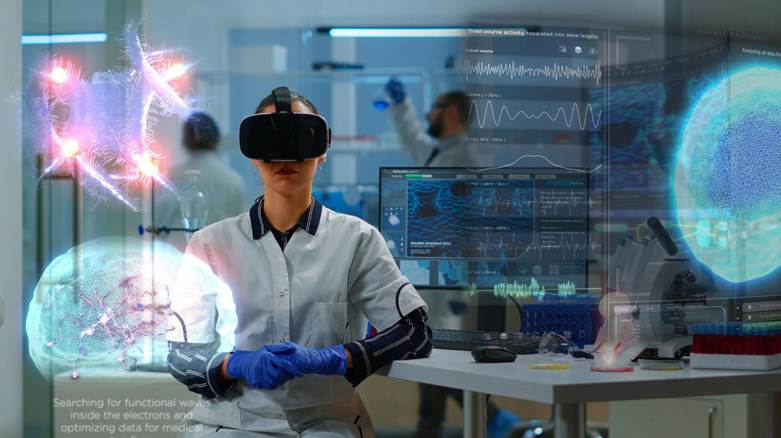
In discussions exploring the reach of light-based innovation beyond traditional research, Seng Tiong Ho has often been linked to perspectives showing how photonics quietly powers much of daily life. Once viewed as a purely scientific discipline, photonics now drives technologies that most people use without realizing it. From digital communication and urban infrastructure to healthcare and home devices, light has become a central player in the way the modern world functions, bridging science, design, and sustainability.
The Invisible Network of Light
At its core, photonics is the science of generating, controlling, and detecting light. While the term might sound niche, its applications have become foundational to modern life. Light doesn’t just illuminate spaces; it moves data, captures information, and supports everything from navigation to environmental monitoring.
A few of the most recognizable applications include:
- Fiber-optic internet: Every email, call, or streamed video travels through fiber-optic cables, carrying data as light signals at near-instant speeds.
- LED lighting: Low-energy light-emitting diodes illuminate homes, vehicles, and cities while reducing global power consumption.
- Laser-based technologies: Barcode scanners, 3D printers, and laser cutters all rely on photonic precision for efficiency and accuracy.
These examples demonstrate how photonics operates silently behind the scenes, connecting industries, homes, and individuals through a shared web of light-based systems.
Healthcare Reimagined through Photonics
In medicine, photonics has transformed both diagnosis and treatment. The ability to use light for non-invasive observation and targeted therapy allows practitioners to deliver care that is faster, safer, and more personalized.
Modern healthcare relies on several light-based technologies, including:
- Laser surgery which minimizes tissue damage and shortens recovery times.
- Optical coherence tomography (OCT), used in eye care to generate detailed images of the retina.
- Infrared monitoring in wearable health devices that track oxygen levels and heart rates with precision.
- Photodynamic therapy, which uses light-sensitive drugs to target specific cancer cells.
Beyond hospitals, photonics enables telemedicine and portable diagnostics, making advanced care accessible in regions that once lacked it. The result is a healthcare landscape illuminated, literally, by the power of light.
Building Smarter, Greener Cities
Cities have become living laboratories for light-based innovation. As governments and industries push toward sustainable urbanization, photonics plays a crucial role in building efficient and resilient infrastructure.
Light-based systems are increasingly visible in:
- Smart traffic management, where sensors use optical signals to monitor congestion and adjust lights dynamically.
- Environmental monitoring, which employs laser-based instruments to detect pollutants and measure air quality.
- Solar integration, transforming buildings and public spaces into sources of renewable energy.
- LiDAR mapping, which allows for precise topographical data and supports the growth of autonomous vehicles.
Photonics not only enhances urban performance but also contributes to safety, efficiency, and environmental responsibility, qualities essential for future-ready cities.
From Science Fiction to Everyday Tech
Photonics has quietly entered the realm of consumer technology, often disguised as convenience or entertainment. The everyday devices that define contemporary living depend on optical systems that make them smarter, faster, and more responsive.
Common examples include:
- Smartphone cameras and sensors, which use photonic imaging for low-light photography, facial recognition, and augmented reality.
- Television and display screens are powered by light modulation to produce clearer images and energy-efficient performance.
- Voice-controlled assistants, many of which rely on infrared depth sensing for accurate motion detection.
- Virtual and augmented reality systems, which use lasers and light-tracking to render immersive digital environments.
Through these advancements, photonics blurs the line between science and lifestyle, turning light into a medium for creativity, connection, and exploration.
Photonics in Everyday Design and Industry
Outside high-tech applications, light-based innovation is reshaping fields like manufacturing, agriculture, and architecture. Its versatility allows it to be embedded into systems that improve precision, reduce waste, and enhance design.
Practical examples include:
- Laser-assisted manufacturing, where light cuts, welds, and engraves materials with sub-millimeter accuracy.
- Agricultural sensors, using spectral light to monitor soil moisture, crop health, and nutrient levels.
- Architectural lighting systems, which adapt brightness and color temperature to human circadian rhythms, improve comfort and focus.
- Quality control in production, where optical scanners detect imperfections invisible to the human eye.
These developments illustrate that photonics is no longer an isolated discipline but an integrative tool for industries aiming to balance performance with sustainability.
Light as a Driver of Sustainable Innovation
Sustainability remains one of the most promising frontiers for photonics. By reducing energy demand, improving monitoring precision, and enabling cleaner production processes, light-based technologies directly contribute to global climate goals.
Key contributions include:
- Energy-efficient illumination through LEDs and smart lighting controls.
- Enhanced renewable energy via photonic materials that improve solar cell efficiency.
- Environmental sensing, where optical systems detect greenhouse gases and track weather changes in real time.
- Waste reduction, as laser-based manufacturing minimizes material loss during production.
These advances show how photonics bridges environmental responsibility with technological innovation, helping industries operate more intelligently while protecting the planet.
The Expanding Future of Light
The future of photonics lies in accessibility and interdisciplinary collaboration. As components become smaller and more affordable, light-based technologies will continue moving from specialized research into classrooms, homes, and creative spaces.
Emerging areas of exploration include:
- Quantum photonics which could revolutionize data security and computing.
- Bio-photonics provides real-time imaging of living cells and tissues.
- Photonics education, where younger generations learn to integrate optical technologies into engineering and design.
What once required an advanced laboratory setup is now available to innovators, entrepreneurs, and students around the world. The democratization of photonics marks a turning point, where light becomes both a scientific tool and a social equalizer.
Illuminating the Everyday
The story of photonics is not about complexity; it’s about clarity. By transforming how people see, communicate, and create, light-based technology reveals the invisible systems that support daily life. It is in every pulse of the internet, every hospital scan, every solar panel, and every glowing screen.
In reimagining photonics as a part of human experience rather than distant science, a new narrative emerges, one that connects sustainability, innovation, and design. Light is no longer confined to laboratories; it has become the quiet architect of modern living, shaping the way societies interact with the world and with each other.