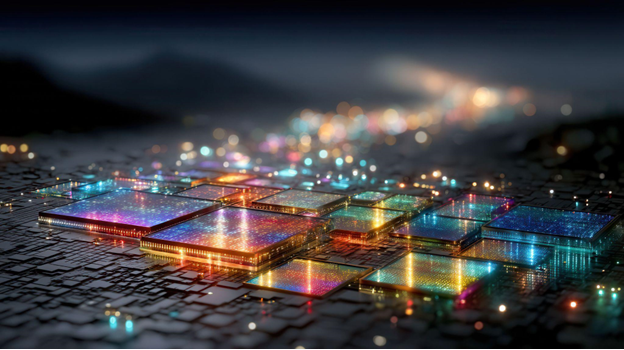
Conversations around emerging technologies frequently highlight the rapid advancement of optical engineering, and similar themes appear in commentary involving innovators such as Seng Tiong Ho. In the broader technology landscape, one field gaining remarkable attention is the development of photonic integrated circuits, which are pushing the boundaries of communication speed, data processing, and energy efficiency. These systems showcase how light-based technologies are shaping the next generation of computing and industrial capabilities.
Photonic integrated circuits, or PICs, have become central to discussions on the future of connectivity and advanced digital infrastructure. As organizations work to process increasingly complex datasets and deliver faster communication systems, PICs promise a leap forward that may rival the shift from analog to digital electronics. Their potential spans industries, from telecommunications and data centers to healthcare, quantum computing, and environmental sensing.
What Makes Photonic Integrated Circuits Transformative
PICs are designed to manipulate light rather than electrical signals, enabling systems to function at higher speeds with lower energy consumption. This benefit alone makes them a powerful contender for the next major technological shift, especially as traditional electronics approach physical limits.
Key Advantages of PIC Technology
- Ultra-high-speed data transfer
Light travels significantly faster than electrical current within circuits, allowing PICs to dramatically increase communication speed.
- Energy efficiency
Photonic systems generate less heat and require less power, reducing operational costs for large-scale technologies like data centers.
- Small footprint
The ability to integrate multiple photonic functions onto a single chip reduces both system size and complexity.
- Lower latency
Real-time applications from autonomous systems to financial technologies benefit from PICs’ minimal signal delay.
These advantages position PICs as one of the most promising platforms for technological innovation.
How PICs Are Designed and Manufactured
Designing PICs involves integrating various optical components such as waveguides, modulators, filters, and detectors onto a single substrate. Silicon photonics has emerged as the leading platform due to its compatibility with traditional semiconductor fabrication processes.
Core Components Found in PICs
- Waveguides that direct light through the circuit
- Optical modulators that encode information
- Photodetectors that convert light into electrical signals
- Multiplexers and demultiplexers for managing wavelength channels
- Resonators for filtering and stabilizing signals
The manufacturing process often mirrors that of electronic integrated circuits but requires precision at the nanoscale to handle optical behavior effectively.
The Role of Silicon Photonics
Silicon has become the material of choice due to its optical properties, availability, and compatibility with CMOS manufacturing. Silicon photonics allows PICs to be produced in high-volume facilities at lower costs, accelerating adoption across industries.
Benefits of Silicon Photonics
- scalable production
- access to mature semiconductor tools
- integration with electronic components
- compatibility with high-volume manufacturing infrastructure
The combination of optical and electronic integration paves the way for hybrid systems that offer enhanced performance across various applications.
Industry Applications Shaping the Future
The versatility of PICs is a major reason the technology continues to climb in relevance. As the digital world demands faster data processing and better energy management, PICs offer solutions that align with long-term technological needs.
1. Data Centers and High-Speed Internet
Data centers consume tremendous power and require high bandwidth to handle global traffic. PICs are transforming these environments with:
- Ultra-fast optical transceivers
- energy-efficient interconnects
- compact routing and switching systems
This shift lowers operational expenses and improves global connectivity, setting the foundation for more resilient digital infrastructure.
2. Telecommunications and 5G/6G
PIC technology strengthens next-generation network performance through:
- Advanced optical fiber communication
- wavelength-division multiplexing
- low-latency long-distance transmission
As 6G research accelerates, photonic circuits are expected to play a foundational role in achieving targeted bandwidth and latency improvements.
3. Quantum Computing and Quantum Communications
PICs provide stable, scalable platforms for manipulating photons in quantum systems. Their stability and low energy requirements provide support:
- Quantum key distribution
- photonic qubits
- integrated quantum components
This makes PICs essential for future secure communication technologies and advanced computing platforms.
4. Bio-Sensing and Medical Diagnostics
In the healthcare sector, PICs support compact, highly sensitive sensing devices. These systems enable:
- Rapid point-of-care diagnostic tools
- lab-on-chip systems
- optical biosensors for early disease detection
Their precision and miniaturization make them valuable for portable diagnostic technologies.
5. Automotive and Autonomous Systems
Light-based circuits support real-time decision-making in self-driving vehicles through:
- High-speed data processing
- lidar technology enhancements
- low-latency sensing systems
These improvements contribute to safer and more responsive autonomous mobility.
Challenges Facing PIC Development
Despite tremendous progress, widespread adoption of PICs requires addressing technical and practical barriers.
Current Limitations Include:
- Thermal management constraints: photonic devices, though energy-efficient, can still experience heat buildup.
- Fabrication complexity, producing highly accurate, stable optical components at scale, is challenging.
- Integration with electronics hybrid systems requires careful engineering to synchronize optical and electrical elements.
- The design tools available for photonic integrated circuits (PICs) are limited, making PIC design more complex than traditional electronics design because of the unique optical behaviors involved.
As research continues, improved manufacturing methods and design frameworks aim to solve these issues and support broader adoption.
Why PICs Are Poised for Massive Growth
Several global trends are accelerating the relevance of photonic integrated circuits:
Key Growth Drivers
- The exponential rise of AI workloads
- The expansion of cloud computing
- increasing demand for high-speed telecommunication
- the push toward greener, energy-efficient technologies
- growing interest in quantum communication and security
These trends indicate that PICs will likely become a standard component in both consumer and industrial technologies.
Emerging Innovations to Watch
Breakthroughs in materials, design methodologies, and hybrid integration drive the future of PICs.
Notable Innovations Include:
- Heterogeneous integration combining multiple materials on a single chip
- New photonic materials such as indium phosphide and silicon nitride
- AI-assisted PIC design improves circuit optimization
- On-chip lasers that reduce dependence on external components
- 3D photonic integration allows for more complex routing and functionality
These advancements will unlock capabilities previously out of reach for optical systems.
How PICs Will Shape the Next Decade
As photonic circuits mature, their influence will extend deeper into everyday life. Over the next decade, experts anticipate:
- Consumer devices with faster processing speeds
- more energy-efficient communication networks
- advanced security protocols powered by quantum photonics
- smarter medical diagnostics and environmental sensors
- robust AI infrastructure capable of handling larger datasets with lower delays
These developments indicate that photonic technologies will underpin many of the digital transformations expected in business, healthcare, science, and communication.
Final Thoughts
Photonic integrated circuits represent more than a technological advancement; they signal a shift toward systems built around speed, efficiency, and scalability. As global demand for high-performance computing and communication continues to rise, PICs offer the structural foundation needed to support future innovation. With ongoing breakthroughs in materials, integration techniques, and application development, this field stands at the center of the next wave of technological progress.